Overview
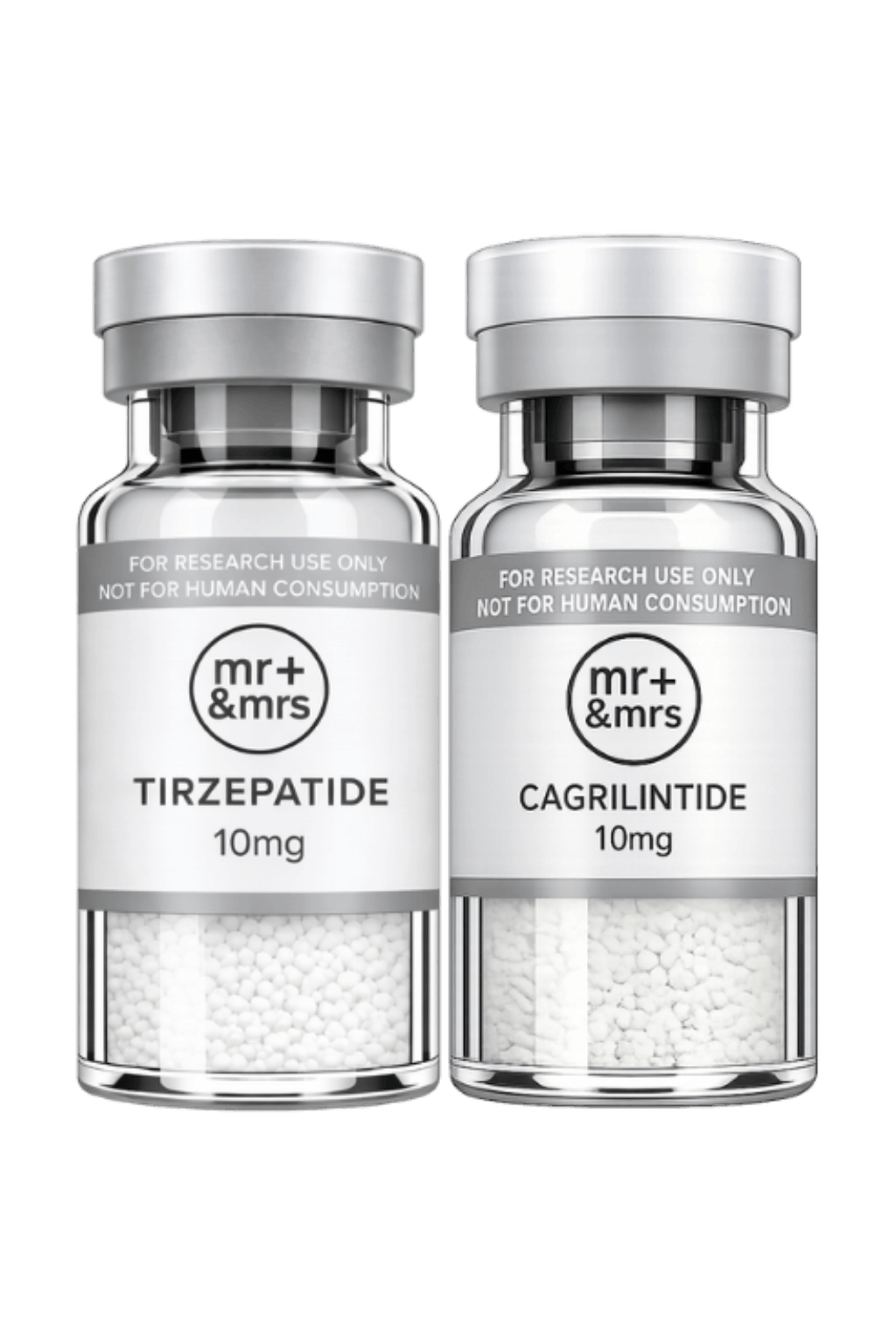
Tirzepatide is a synthetic peptide analog that has been investigated for its effects on insulin signaling, glucagon modulation, and gastric motility under experimental conditions. Tirzepatide is a GIP/GLP-1 works as a dual receptor agonist, meaning that it interacts with glucose-dependent insulinotropic polypeptide (GIP) and glucagon-like peptide-1 (GLP-1) receptors, which are involved in pathways related to metabolic regulation. Glucose-dependent insulinotropic polypeptide (GIP): Stimulates insulin release from the pancreas in response to food. Glucagon-like peptide-1 (GLP-1): Prompts insulin secretion and slows down gastric emptying.Preclinical research in animal models suggests that the combined effect of these two actions can lead to improved blood sugar control and weight loss. The enhanced metabolic regulation may carry the potential for improved cardiovascular function. This product requires reconstitution before use and is intended for research purposes only. Not for human consumption. Research suggests that this investigational peptide, among Cagrilintide peptides studied in metabolic research, may interact with the calcitonin receptor with potentially enhanced pharmacokinetic properties. Studies indicate it may influence cellular signaling through three primary mechanisms: receptor interaction, cellular processes, and what appears to be observed in gastric activity. Preliminary clinical data suggests there may be notable laboratory measurements, particularly in type 2 diabetes contexts. The compound’s modified structure may exhibit different stability profiles compared to native amylin, potentially allowing for sustained receptor interaction. Current investigations are assessing its possible applications in obesity and metabolic research. The Cagrilintide compound requires proper reconstitution prior to administration according to laboratory protocols.