Overview
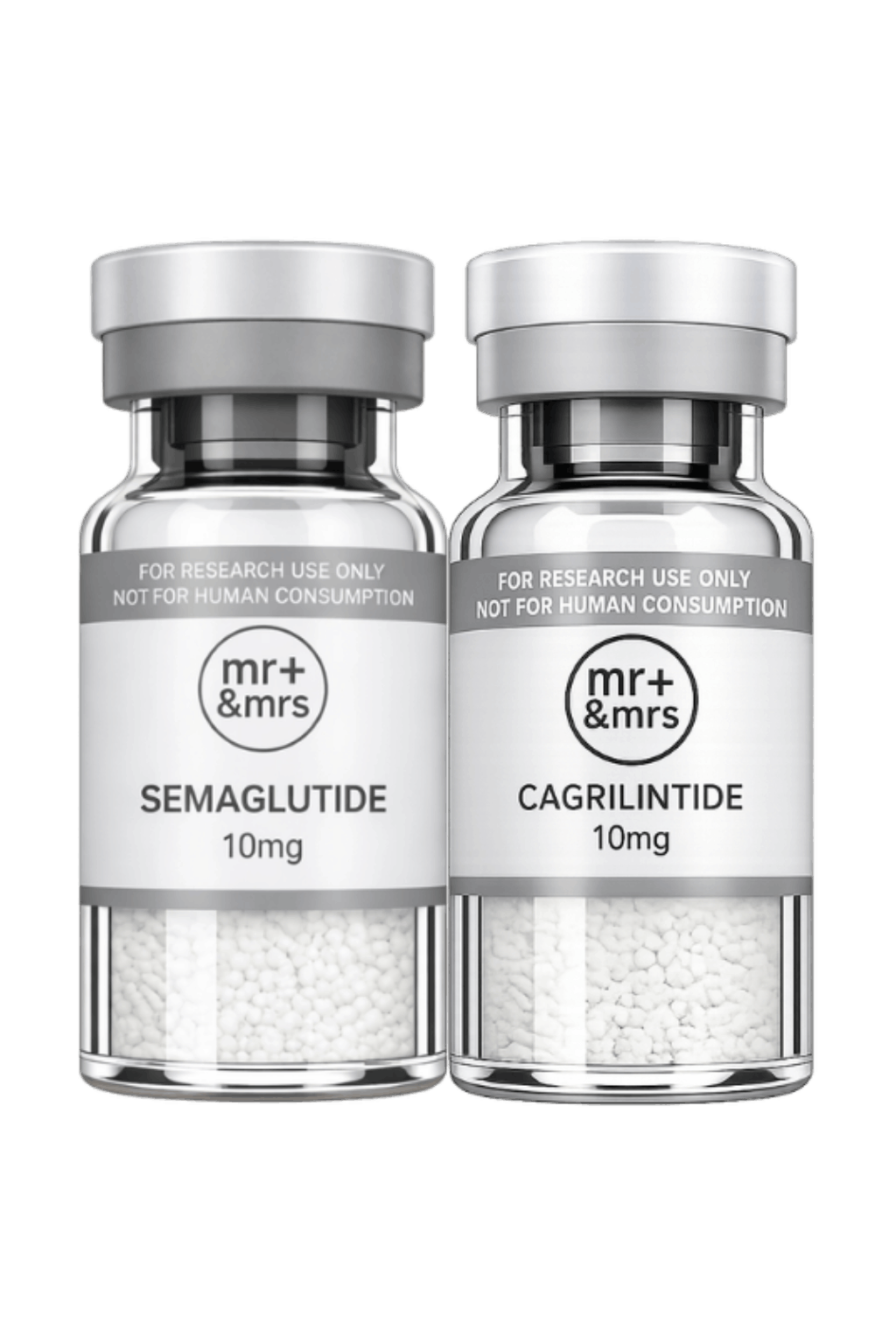
Semaglutide is a synthetic glucagon-like peptide-1 (GLP-1) receptor agonist that has garnered significant attention in the field of endocrinology and metabolic research. Structurally similar to native GLP-1, semaglutide is designed with modifications that enhance its half-life and resistance to degradation by dipeptidyl peptidase-4 (DPP-4). This peptide binds to and activates the GLP-1 receptor, initiating a cascade of physiological responses that affect glucose homeostasis, appetite regulation, and cardiovascular function. Requires reconstitution before use. Research suggests that this investigational peptide, among Cagrilintide peptides studied in metabolic research, may interact with the calcitonin receptor with potentially enhanced pharmacokinetic properties. Studies indicate it may influence cellular signaling through three primary mechanisms: receptor interaction, cellular processes, and what appears to be observed in gastric activity. Preliminary clinical data suggests there may be notable laboratory measurements, particularly in type 2 diabetes contexts. The compound’s modified structure may exhibit different stability profiles compared to native amylin, potentially allowing for sustained receptor interaction. Current investigations are assessing its possible applications in obesity and metabolic research. The Cagrilintide compound requires proper reconstitution prior to administration according to laboratory protocols.